
Few jobs carry the risks railroaders face every shift: moving equipment that weighs thousands of tons, uneven ballast underfoot, toxic materials and long hours in every kind of weather. If you are hurt while working for a railroad, the state workers’ compensation system that covers most employees does not apply to you. Your rights come from a federal law, the Federal Employers’ Liability Act (FELA).
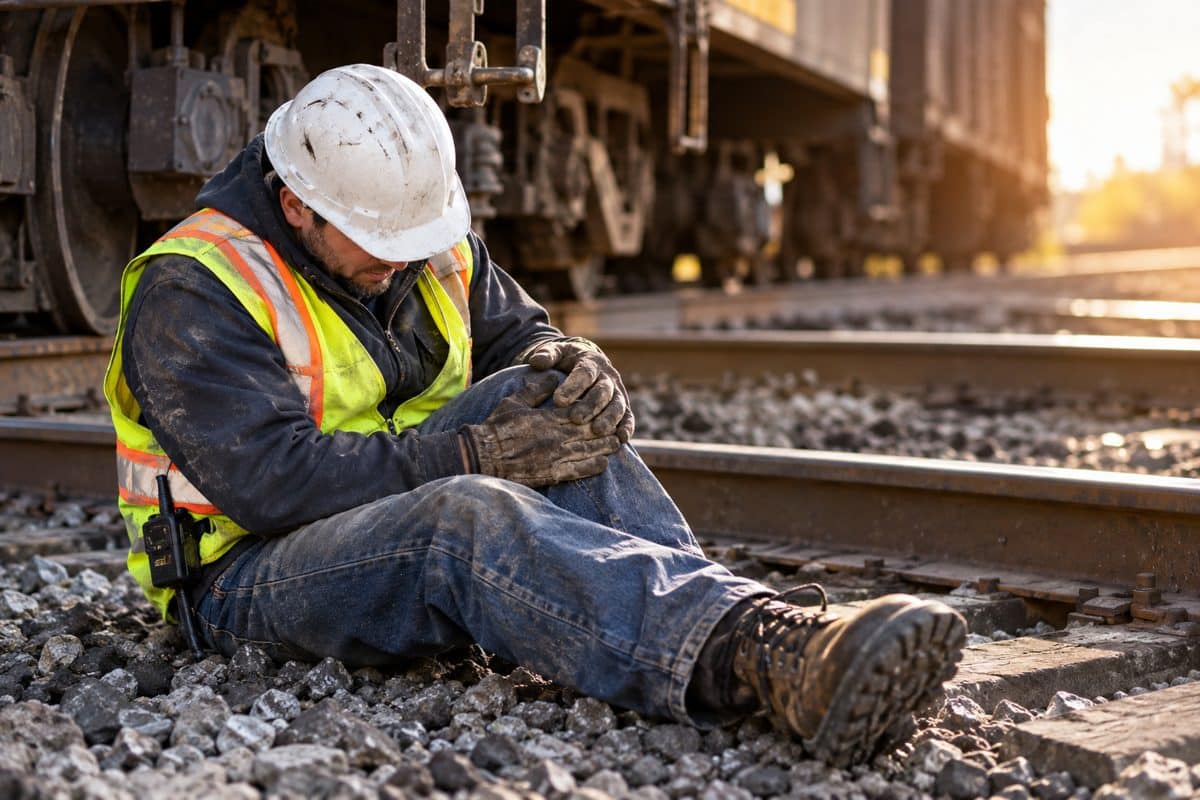
Wieand Parker Arreola, PLLC, represents injured railroad employees and their families in FELA claims across Pennsylvania and New Jersey. After an incident, the railroad’s claim agents and investigators often start gathering statements and evidence within hours. We step in to protect your claim, conduct our own investigation and pursue every dollar the law allows.
Injured on the railroad? Call (215) 666-7777 for a free, confidential case review.
Congress enacted the Federal Employers’ Liability Act in 1908 (45 U.S.C. §§ 51–60) to give injured railroad workers a way to hold their employers responsible for unsafe conditions. The law protects employees of railroads engaged in interstate commerce, including conductors, engineers, trackmen, carmen, signal maintainers, clerks and many other crafts.
FELA is different from workers’ compensation in one important way: it is based on fault. You must show that the railroad was negligent, but in exchange you can recover the full value of your losses rather than the limited benefits a workers’ comp schedule provides.
| FELA | State workers’ comp | |
|---|---|---|
| Who it covers | Railroad employees | Most other employees |
| Must prove fault? | Yes, railroad negligence | No |
| Pain and suffering | Recoverable | Not available |
| Lost wages | Full past and future losses | Partial, capped benefits |
| Who decides | A judge or jury | An administrative system |
FELA applies to sudden accidents and to injuries and diseases that develop over years on the job. The FELA claims we handle include:
The burden of proof in a FELA case is lighter than in most injury lawsuits. In Rogers v. Missouri Pacific Railroad Co. (1957), the U.S. Supreme Court held that a worker can recover if the railroad’s negligence played any part, even the slightest, in producing the injury.
Every railroad must provide its employees with a reasonably safe place to work. Examples of negligence include:
Comparative fault. If you share some responsibility for the accident, your award is reduced by your percentage of fault, but you can still recover. If the railroad violated a federal safety statute, such as the Safety Appliance Act or the Locomotive Inspection Act, your own fault cannot be used to reduce your compensation at all.
A successful FELA claim pays the full value of your losses, not a fixed percentage of your wages. Recoverable damages may include:
The value of a claim depends on the severity of the injury, your age and earnings and the strength of the evidence, so every case is different.
A FELA lawsuit generally must be filed within three years (45 U.S.C. § 56). For occupational illnesses and cumulative injuries, the three years usually begin when you knew, or reasonably should have known, that your condition was connected to your work. Delay can cost you your claim, so talk with a lawyer early.
To protect your rights after a railroad injury:
The Federal Railroad Safety Act (49 U.S.C. § 20109) also protects you. A railroad may not discipline or retaliate against you for reporting an injury or a safety hazard, and it may not deny, delay or interfere with your medical treatment or punish you for following your doctor’s orders. A retaliation complaint must be filed with OSHA within 180 days, a much shorter deadline than a FELA lawsuit.
If you receive Railroad Retirement Board sickness benefits while you are out of work, the RRB may be entitled to be repaid from your FELA recovery. We account for these benefits when resolving your case.
Railroads rely on in-house claim departments and experienced defense lawyers to keep payouts low. You need a firm that understands FELA and is prepared to try your case if the railroad will not offer a fair settlement. With Wieand Parker Arreola, you get:
We also represent workers hurt in other industries. Learn more about our work injury and construction accident practices.
No. Railroad workers covered by FELA generally cannot collect state workers’ compensation. FELA is their remedy for on-the-job injuries.
Usually three years from the date of injury, or from the date you discovered that an illness was related to your work.
Yes. Your award is reduced by your percentage of fault, unless the railroad violated a federal safety statute, in which case it is not reduced.
Yes. The personal representative of the worker’s estate can bring a wrongful death claim for the benefit of the surviving spouse, children or other dependents.
No. Retaliating against a worker for reporting an injury, or interfering with an injured worker’s medical treatment, is illegal under the Federal Railroad Safety Act. A retaliation complaint must be filed with OSHA within 180 days.
Wieand Parker Arreola, PLLC, represents injured railroad workers from our offices in Philadelphia, Malvern, Plymouth Meeting, Radnor and Cherry Hill, New Jersey, and across Pennsylvania and New Jersey.
Call (215) 666-7777 or contact us online for a free, confidential consultation.
This page provides general information and is not legal advice. Contacting our firm does not create an attorney-client relationship.
